
Why Tile Fails
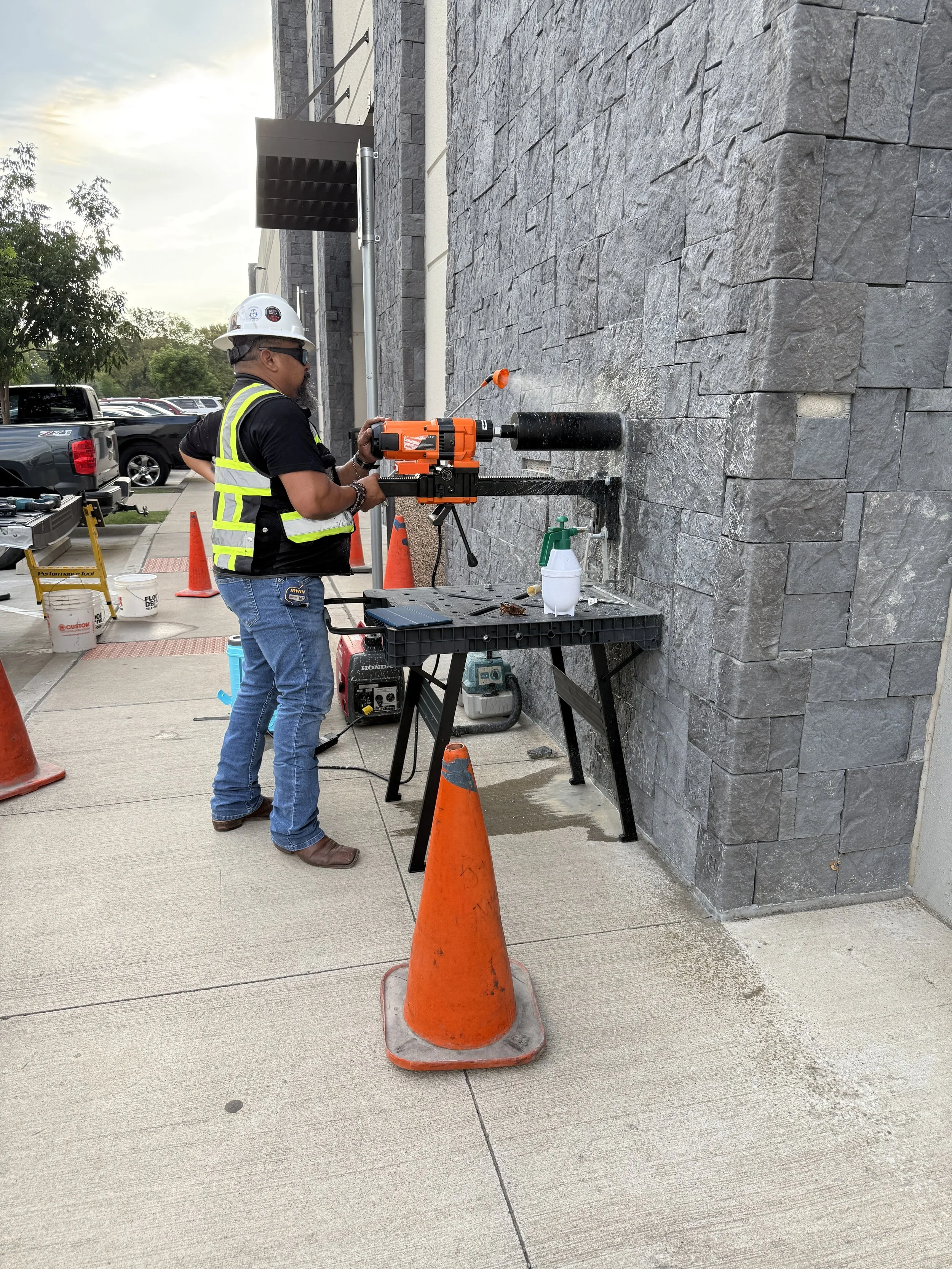
When tile fails, we explain why.
Tile is one of the most durable building materials in the world — Roman tile floors are still intact after 2,000 years. So when a modern tile floor, wall, or facade cracks, lifts, sounds hollow, or falls, it is almost never the tile's fault. Tile failures are installation and design failures.
This guide explains the most common ways tile fails, what each symptom actually means, and how a forensic inspection determines why it happened and who is responsible.
By Erin Albrecht · Forensic Tile & Stone Consultant, Tile & Stone Forensics
First, what counts as “tile failure”?
Tile failure is any condition where a tile, stone, or facade assembly no longer performs as it should — structurally, functionally, or aesthetically. It usually shows up as one or more of these symptoms:
Cracking — through the tile face, or telegraphing up from the substrate.
Hollow spots — tiles that sound empty when tapped (a sign of poor bond).
Lifting, tenting, or peaking — tiles popping up off the floor, sometimes explosively.
Delamination — the tile separating from the setting bed, or the setting bed from the substrate.
Loose or detaching tile — especially dangerous on walls and exterior facades.
Grout failure — cracking, crumbling, or falling out.
Efflorescence — white, chalky mineral deposits on the surface.
Staining, discoloration, or moisture — often a symptom of a deeper water-management problem.
Most of these are symptoms. The real cause is usually hidden in how the assembly was designed or installed.
The 8 Most Common Reasons Tile Fails
1. No movement accommodation — the #1 cause of cracked and tented tile
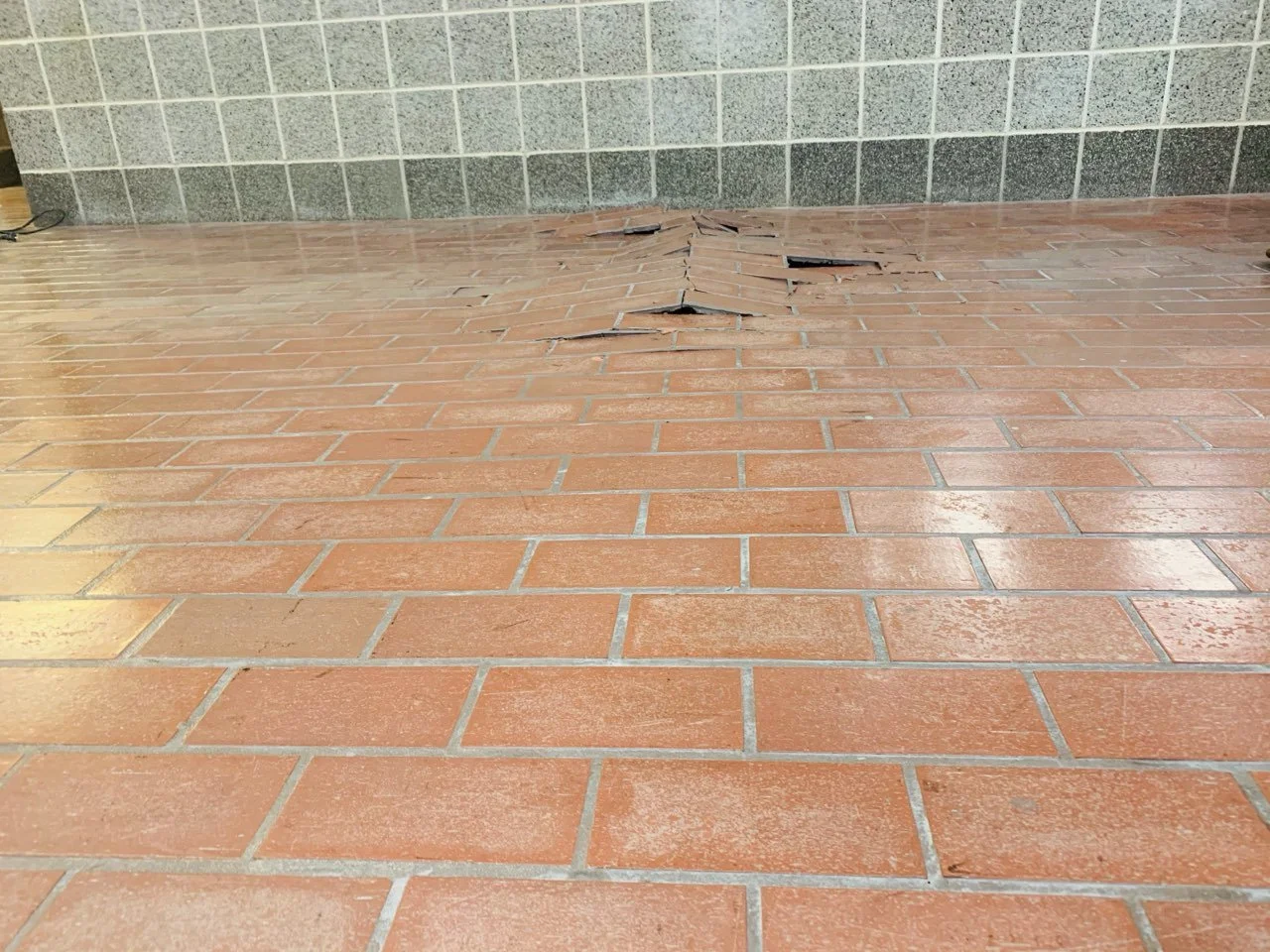
Buildings move. They expand and contract with temperature, shrink as concrete cures, deflect under load, and shift as the structure settles. Tile and grout are rigid and cannot absorb that movement. When the installer leaves out movement joints — soft, flexible joints required where tile meets walls, at changes in plane, over control joints, and at intervals in the field — the stress has nowhere to go. The result is cracking, or in severe cases tenting (tile lifting off the floor, sometimes violently).
What it looks like: A straight line of cracked tile, or a ridge of tiles popped up into a peak.
Why it matters: This is a design/installation defect, not a material defect. Industry standards (TCNA Handbook detail EJ171 and ANSI A108) require movement joints — their absence is one of the leading causes of tile failure.
🔍 Tile nerd note: there's an actual standard for this — TCNA detail EJ171. We have it memorized. We're not proud of that. (We're a little proud of that.)
2. Poor bond or improper mortar coverage
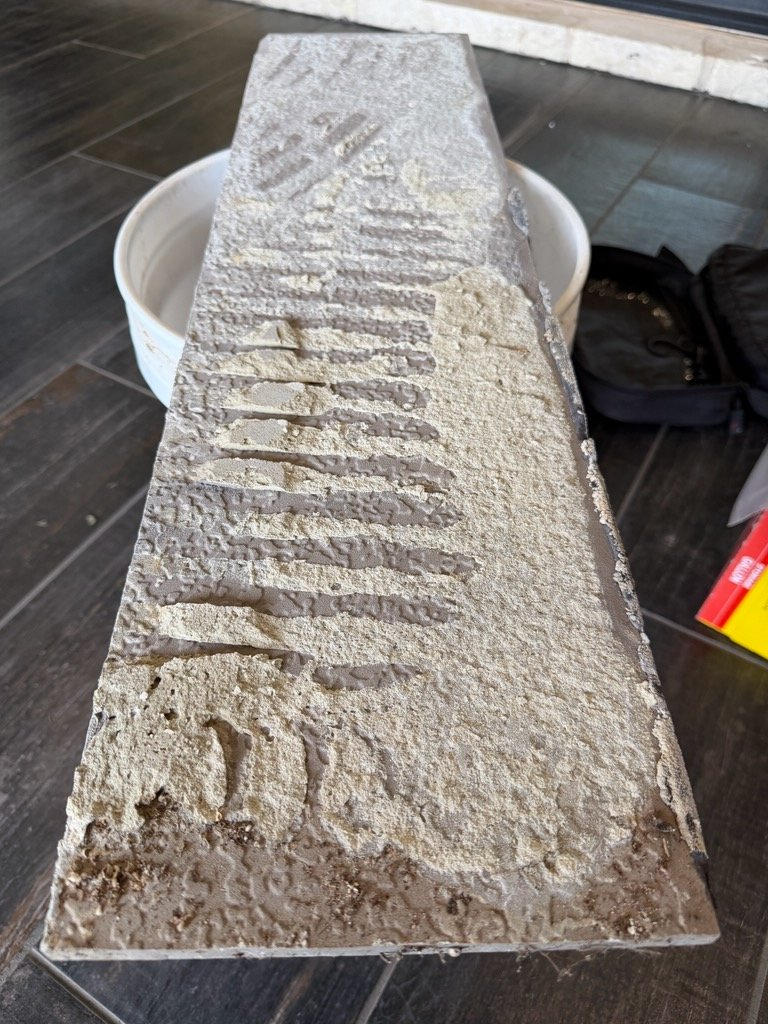
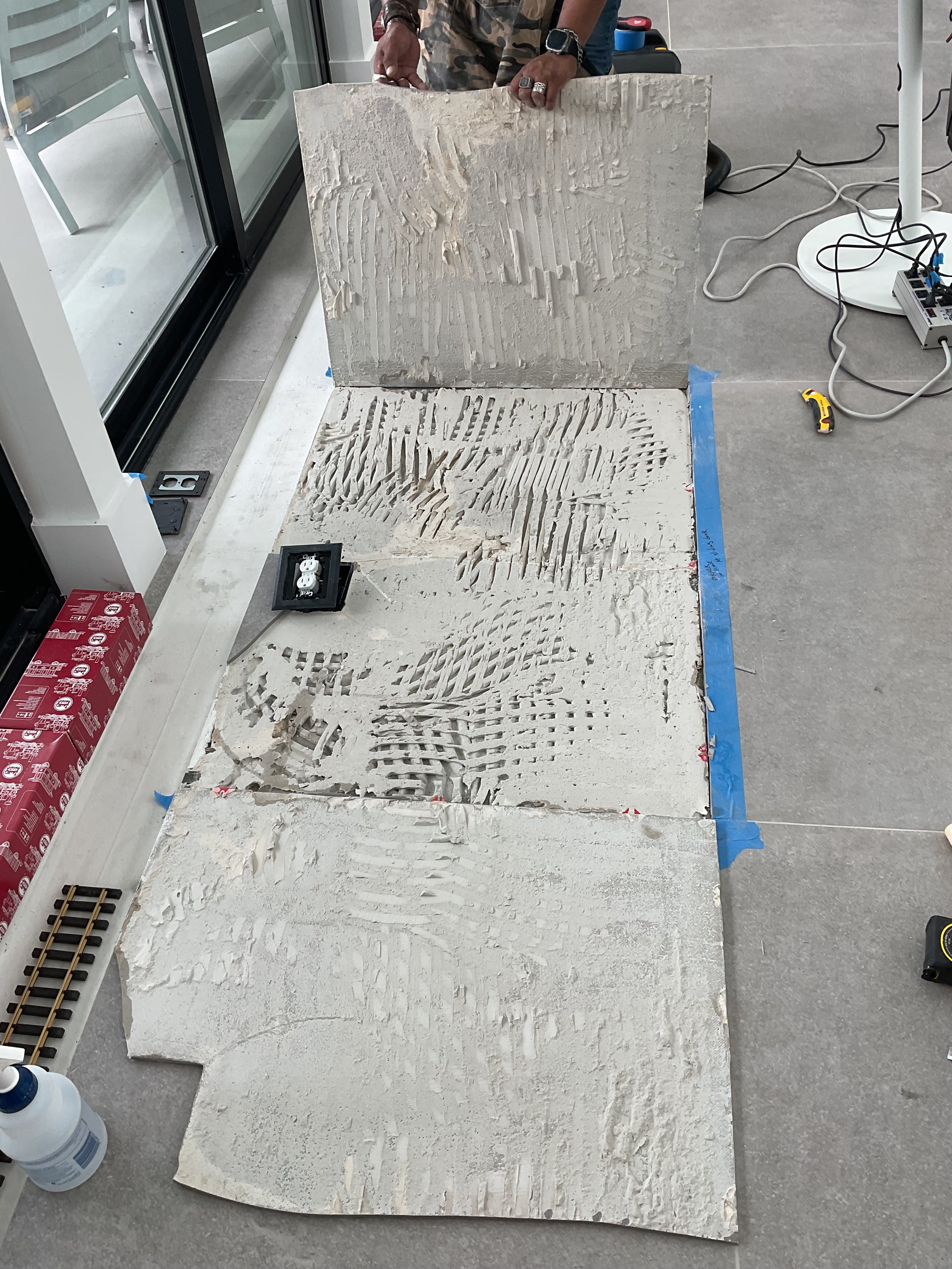
A tile is only as good as its bond to the surface beneath it. Failures happen when the installer uses the wrong adhesive, lets the mortar "skin over" before setting the tile, doesn't back-butter large tiles, or leaves voids underneath. Standards require specific mortar coverage — generally ≥80% for interior dry areas and ≥95% for wet and exterior areas. Anything less leaves weak spots that crack under load or trap water.
What it looks like: Hollow-sounding tiles, cracked corners, tiles that lift off cleanly with little mortar attached.
Why it matters: Coverage can be measured directly by pulling a tile — one of the clearest forms of forensic evidence.
🔍 Tile nerd note: we can read coverage by pulling one tile and looking at the mortar pattern on its back. It's weirdly satisfying.
3. Substrate problems: cracks, deflection, and movement below the tile
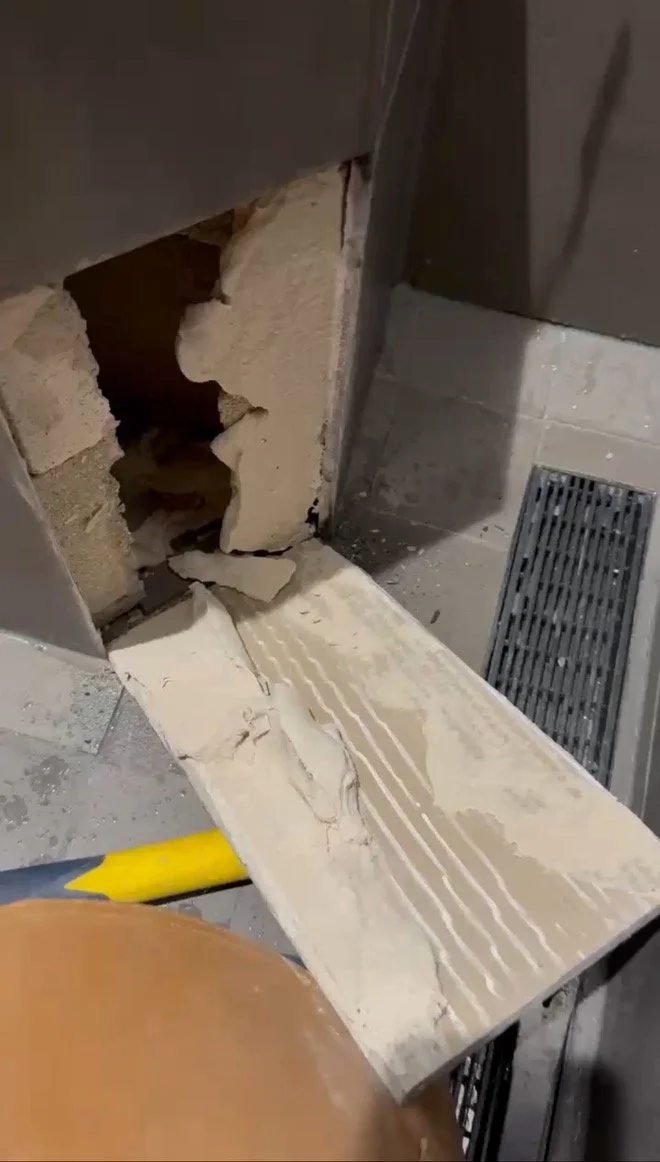
Tile telegraphs whatever the surface under it does. A cracking concrete slab, a wood floor that flexes too much (excessive deflection), or a substrate that wasn't flat, clean, or properly prepared will transfer its problems straight up into the tile. Floors must be stiff enough for tile (the standard is L/360 deflection — stricter for stone), and cracks in concrete need crack-isolation membranes before tiling.
What it looks like: Cracks in tile that line up over a slab crack or a floor joist; bouncy floors; widespread cracking.
Why it matters: This determines whether the failure is the tile installer's fault, the framer's, or the structural designer's.
🔍 Tile nerd note: the "hollow tap" test is exactly what it sounds like — we tap the tile and listen. Yes, we do it in other people's bathrooms too.
4. Water and moisture intrusion
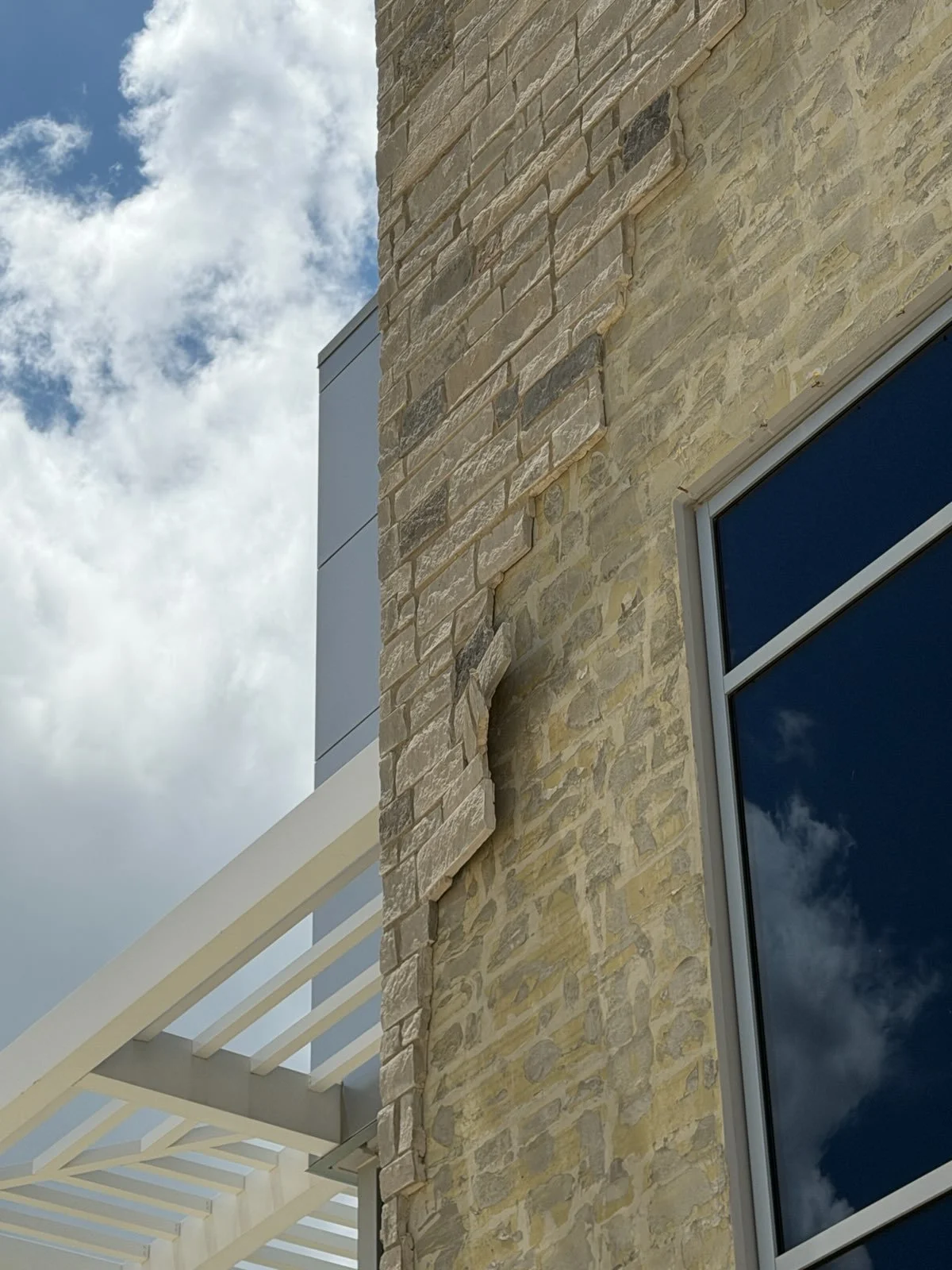
Water is the leading hidden driver of tile failure, especially in showers, on facades, and outdoors. Missing or misapplied waterproofing membranes, no slope to drains, failed sealant joints, or vapor problems let water get behind the tile. Once there, it breaks bonds, freezes and expands (freeze-thaw), grows mold, and carries minerals to the surface.
What it looks like: Persistent dampness, musty smell, loose tile in wet areas, efflorescence, staining.
Why it matters: Moisture failures are often code and standard violations (waterproofing, slope to drain) and frequently tie back to a specific trade.
5. Efflorescence and mineral deposits
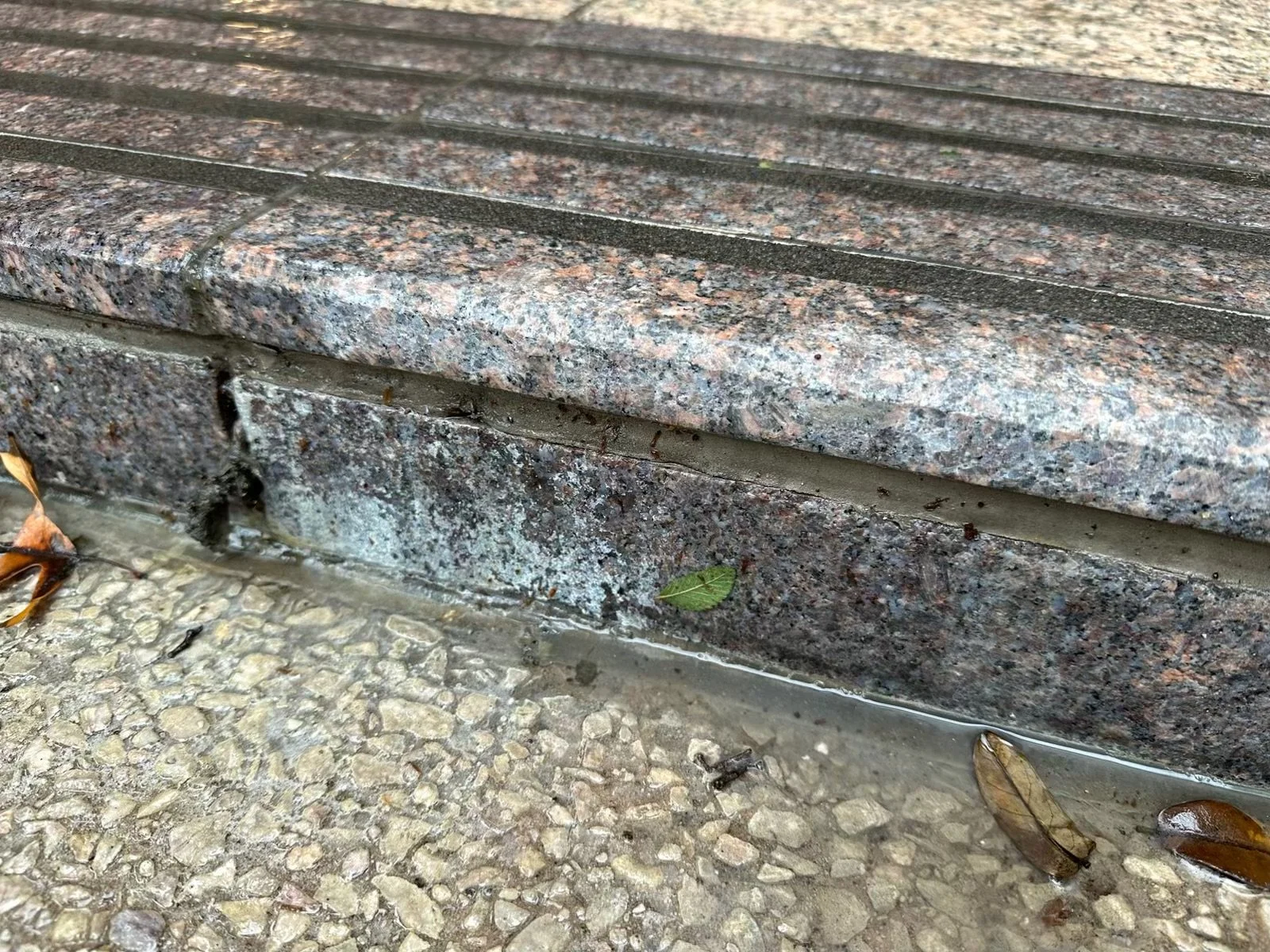
That white, chalky haze isn't a stain you can scrub off — it's mineral salts carried to the surface by moisture moving through the assembly. Efflorescence is a symptom: it tells you water is getting into the system and evaporating at the surface. Treating the haze without fixing the water source guarantees it comes back.
What it looks like: White, powdery, or crystalline deposits on tile or in grout joints.
Why it matters: It's diagnostic. It points an inspector toward the real moisture problem.
🔍 Tile nerd note: that chalky haze has a name and a chemistry, and we will explain both if you give us the opening.
6. Wrong product for the application
Not all tile, stone, or setting material is rated for every use. Using a wall tile on a floor, a non-rated tile outdoors, a slippery tile where slip resistance is required, or a water-sensitive stone in a wet area sets the installation up to fail. Selection is governed by tile performance ratings (ANSI A137.1) and the project conditions.
What it looks like: Surface wear, cracking under foot traffic, slip hazards, water-damaged stone.
Why it matters: This can shift responsibility to the specifier, designer, or supplier rather than the installer.
7. Exterior facade failures
Exterior tile and stone facades face every stressor at once: temperature swings, freeze-thaw, wind load, water, and building movement — often stories above a sidewalk. Failures here aren't just cosmetic; falling facade tile is a life-safety hazard. Causes include inadequate anchoring, missing movement joints, water intrusion behind the cladding, and freeze-thaw damage.
What it looks like: Bulging, cracked, spalled, or missing facade tile; staining; loose pieces.
Why it matters: Facade failures carry serious liability and often require expert forensic documentation for repair design and litigation.
8. Workmanship and “rushing the job”
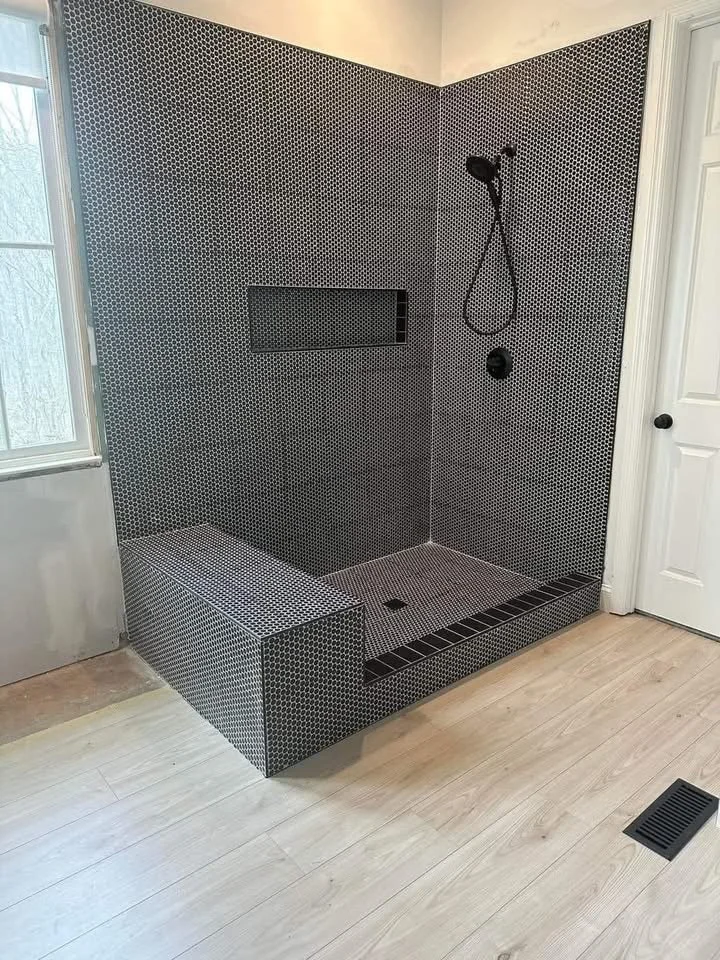
Many failures come down to fundamentals being skipped: not following the manufacturer's instructions, not allowing proper cure times, mixing mortar wrong, tiling over dirty or contaminated surfaces, or ignoring the written installation standards. Each shortcut is individually small; together they cause systemic failure.
What it looks like: A mix of the symptoms above, often across a whole installation.
Why it matters: When work departs from published standards and manufacturer instructions, responsibility is usually clear.
What your tile is telling you
A quick symptom-to-cause guide. These are starting points, a forensic inspection confirms the real cause.
Tiles sound hollow when tapped → Poor mortar bond / voids under the tile
A straight line of cracked tiles → Missing movement joint, or a substrate crack below
Tiles peaked up into a ridge ("tenting") → No movement accommodation; compressive stress
Cracks lining up over a slab or joist → Substrate cracking or deflection
White chalky haze on surface or grout → Efflorescence — moisture moving through the assembly
Loose or missing tile in a shower → Failed waterproofing / no slope to drain
Grout cracking and falling out → Movement, wrong grout, or a failing substrate
Facade tile bulging or falling → Anchoring failure, water intrusion, freeze-thaw — call a professional immediately
Whose fault is it? How responsibility gets determined
When tile fails, the question owners and attorneys ask is who pays to fix it. Answering that is exactly what a forensic tile inspection does. Responsibility can land with:
the tile installer (workmanship, coverage, missing joints),
the general contractor (scheduling, coordination, substrate handoff),
the architect or specifier (wrong product, missing details in the design),
the structural engineer or framer (excessive deflection, slab cracking),
the manufacturer (a genuine product defect — the rarest cause), or
some combination of the above.
A forensic inspection separates symptom from cause, compares the work against the published standards (TCNA Handbook, ANSI A108/A118/A137) and applicable building codes, and documents the evidence in a defensible report — for whichever side the evidence supports.
When to call a forensic tile consultant
Consider a forensic inspection if:
Tile is failing on a new or recently renovated project.
You're facing a dispute with a contractor over who's responsible.
A facade or exterior installation is cracking, bulging, or losing pieces (a safety issue).
An insurance claim or lawsuit requires documented, standards-based evidence.
You need an independent second opinion before paying for a repair or accepting blame.
A forensic tile consultant is independent — not selling you a repair — so the findings stand up in negotiation, insurance claims, and court.
Worried about a tile failure?
Tile & Stone Forensics provides independent, standards-based forensic inspections and litigation-ready reports for homeowners, building owners, contractors, and attorneys — on-site or by live video, nationwide.
FAQs
Is tile failure usually the tile's fault?
1
No. Tile itself is extremely durable. The overwhelming majority of tile failures are caused by installation errors, design defects, substrate problems, or water intrusion — not by the tile material.
Why is my tile cracking in a straight line?
2
A straight crack usually means stress from building movement with no movement joint to absorb it, or a crack in the substrate (like a concrete slab) telegraphing up through the tile.
Why are my tiles popping up off the floor?
3
That's called tenting. It happens when the floor expands or the building moves and there's no soft movement joint to relieve the pressure, so the tiles buckle upward. It's a classic installation-defect symptom.
What does it mean when tile sounds hollow?
4
Hollow-sounding tile usually means there isn't enough mortar bonding it to the surface beneath. Industry standards require roughly 80–95% mortar coverage depending on the location; less than that leaves voids that lead to cracking and detachment.
What is efflorescence and is it dangerous?
5
Efflorescence is the white, chalky mineral deposit left when moisture moves through a tile assembly and evaporates at the surface. It's not dangerous itself, but it's a warning sign that water is getting into the system — which is what actually needs to be fixed.
Who is responsible when tile fails?
6
It depends on the cause. Responsibility can fall on the installer, general contractor, designer, engineer, or manufacturer — sometimes more than one. A forensic tile inspection determines the cause and assigns responsibility based on evidence and standards.
Do I need a forensic inspection or just a repair?
7
If there's a dispute, an insurance claim, a safety concern, or significant money at stake, an independent forensic inspection protects you. It identifies the true cause so the repair actually solves the problem — and documents who's responsible.
Worried about tile failure?
Independent, standards-based forensic inspections and litigation-ready reports for homeowners, owners, contractors, and attorneys — on-site or by live video, nationwide.